Deke SLAYTON |
|
PROFILE |
|
Full Name: |
Donald Kent 'Deke' SLAYTON. |
Rank: |
Major, US Air Force. (Deceased.) |
Born: |
1 March 1924, in Sparta, Wisconsin, USA (American). |
Died: |
13 June 1993, in League City, Texas, aged 69. |
Education: |
1942: Graduated Sparta High School.
1949: BSc degree in Aeronautical Engineering from the University of Minnesota, Minneapolis, Minnesota. |
Career Highlights: |
1942-46: Served in the Army Air Corps; completed flight training and flew 56 combat missions in B25 bombers over Europe during WWII with the 340th Bombardment Group; returned to the US to become an instructor pilot and later as a proficiency pilot on the A-26 bomber; completed 7 combat missions in A-26s in the Pacific theatre with the 319th Bombardment Group; served as a B-25 instructor pilot for a year after the end of WWII; (1946) honourably discharged from the Air Force.
1947-49: Student, University of Minnesota.
1949-51: Engineer, Boeing Aircraft Company, Seattle, Washington, where he worked on electrical systems and wing designs.
1951-63: Recalled to active duty as a maintenance flight test officer with F-51 squadron; then as a technical inspector at Headquarters, Twelfth Air Force; then with the 36th Fighter Day Wing at Bitburg, West Germany; (1955) returned to the US and attended USAF Test Pilot School, Edwards AFB, California, serving as a test pilot there from 1956 to 1959. He resigned from the USAF to continue as a civilian employee at NASA in 1963. |
|
|
NASA ASTRONAUT ASSIGNMENTS |
|
1959: |
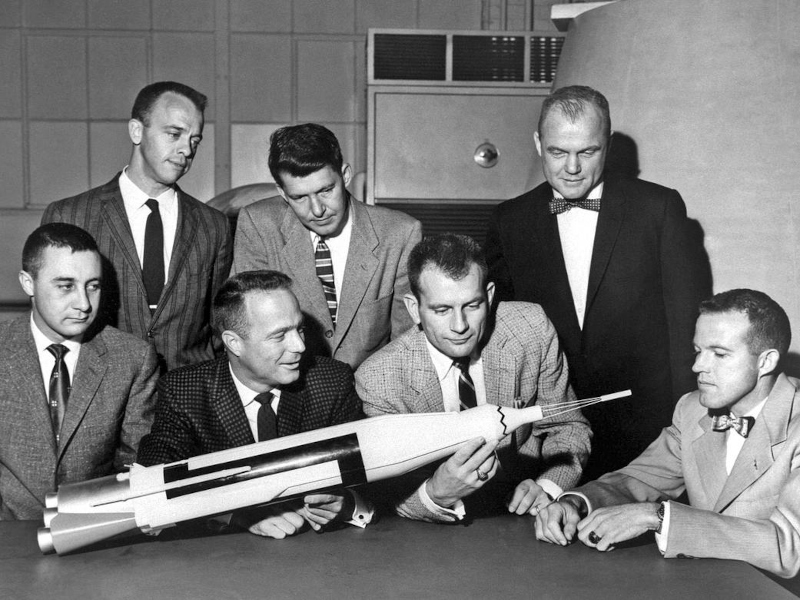
(9 Apr) Selected as one of the 'Original Seven' Mercury astronauts for NASA's Group 1; basic astronaut training'; (Jul) specialisation technical assignment in the Atlas launch vehicle; Mercury training. |
1960: |
Mercury training. |
1961: |
Mercury training; (May) Capcom MR-3 (Shepard); Mercury training; (Jul) Capcom MR-4 (Grissom); Mercury training; (Nov) informed he would fly MA-7, the second orbital mission; (29 Nov) named as Pilot MA-7, which he named Delta 7; Mercury training. |
1962: |
Mercury training; (15 Mar) removed from MA-7 due to medical issues and replaced by Scott Carpenter; Mercury support; (May) Capcom MA-7 (Carpenter); Mercury support; (Oct) Capcom MA-8 (Schirra); (18 Oct) Co-ordinator of Astronaut Activities, MSC. |
1962-63: |
Co-ordinator of Astronaut Activities (Chief Astronaut), MSC; (Nov 1963) resigned from USAF and assumed role of Director of Flight Crew Operations, MSC. |
1963-72: |
Director of Flight Crew Operations (FCO), MSC. |
1972: |
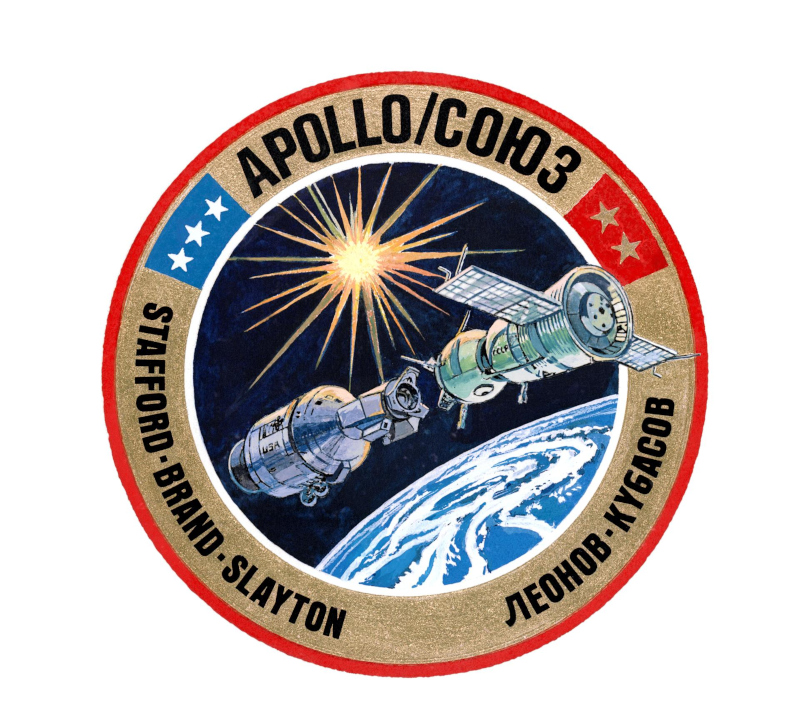
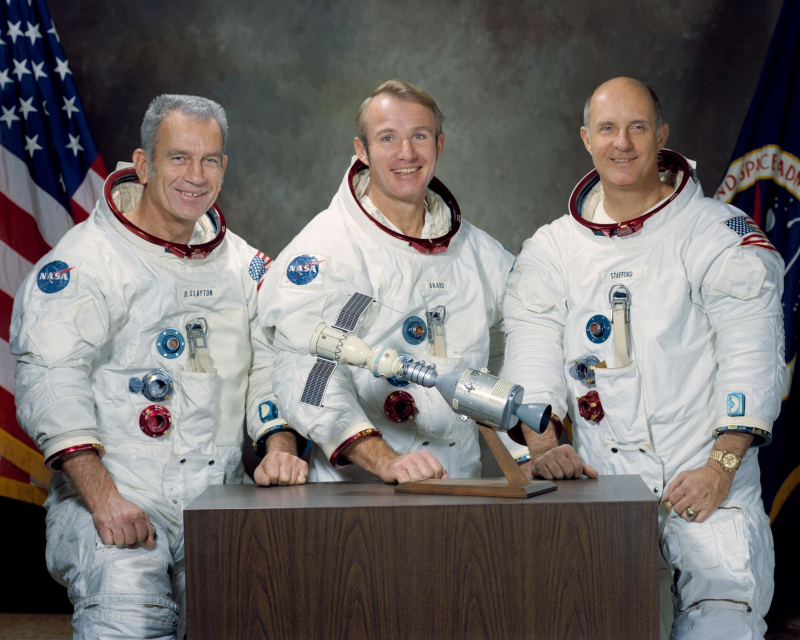
(13 Mar) Re-instated to flight status; Director FCO, MSC; nominated (himself) for Apollo-Soyuz Test Project (ASTP); (late) informed he would be Docking Module Pilot, ASTP. |
1973: |
(30 Jan) Named as Docking Module Pilot (DMP) Apollo 18, the US ASTP spacecraft; ASTP training; some of his work as Director, FCO assumed by Al Shepard until 1974. |
1974: |
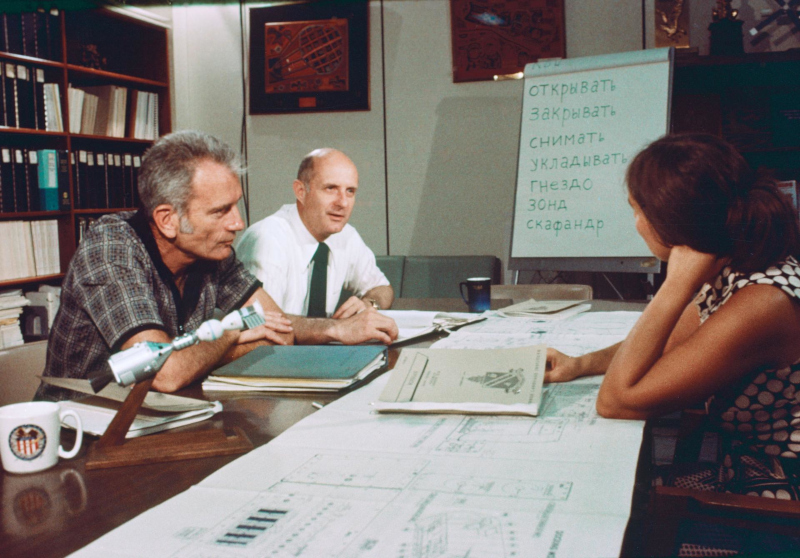
ASTP training; (Feb) resigned as Director, FCO to assume full-time preparation for ASTP; ASTP training, including visits to the Soviet Union (USSR). |
1975: |
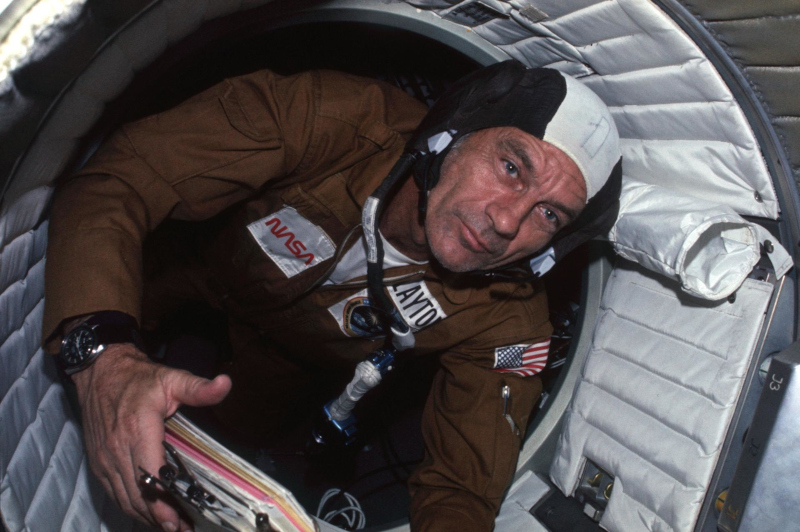
ASTP training, including visits to the USSR; (15-25 Jul) flew as DMP Apollo 18 ASTP (9 days 1 hr 28 min), including 44 hours of joint docking operations with Soyuz 19; Slayton spent 1 hr 35 min inside Soyuz 19; (Sep-Oct) two 2-week tours across the USA and USSR; retired from the Astronaut Office and FCO Directorate. |
|
|
POST-ASTRONAUT EXPERIENCE |
|
Dec 1975-Nov 1977: |
Manager, Shuttle Approach and Landing Tests (ALT), NASA Dryden Flight Research Center, Edwards AFB, California. |
Nov 1977-Feb 1982: |
Manager, Shuttle Orbital Flight Test (OFT) Program, NASA JSC; (Feb 1981) officially retired but remained in a temporary position as a consultant during the initial Shuttle OFT programme; (27 Feb 1982) departed from NASA. |
1982-93: |
President and Vice-Chairman of Space Services Inc.; (1983) Space Service Inc. formed a joint company with American Science and Technology and Aero Data Corporation to become Space America Inc, with Slayton as Chairman and Director. |
13 Jun 1993: |
Died from a brain tumor, aged 69, at home in League City, Texas. His autobiography Deke: US Manned Space, From Mercury to the Shuttle, written with Michael Cassutt, was published posthumously in 1994. |
|
|
Deke SLAYTON Space Flight Missions |
||||||
Mission |
Vehicle |
Position |
Dates DD/MM/YYYY |
Duration DD:HH:MM:SS |
Orbits |
EVAs |
ASTP |
Saturn 1B |
Docking Module Pilot |
15/07/1975-24/07/1975 |
09:01:28:24 |
137 |
0 |
|
||||||
Missions Flown: |
1 |
Total Flight Time: |
09:01:28:24 |
137 |
0 |
|
|
|
|
|
|
|
|
Space Explorer Achievements |
||||||
Crewmember, first joint US-Russian space flight mission Last of NASA's Group 1 'Original Seven' Mercury astronauts to fly in space, 16 years after selection At the time of his ASTP flight, he was the oldest person to fly in space (51 years 4 months 14 days) |
||||||